Lost in Translation No More: How AI Is Opening New Creative Frontiers Between US Institutions and International Artists
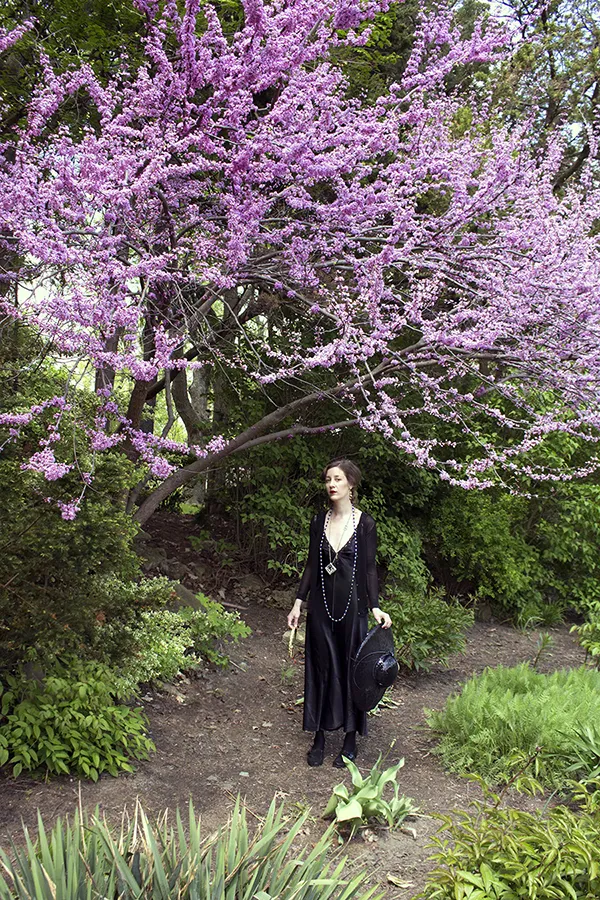
Photo: Nadja Pelkey, CC BY-SA 4.0, via Wikimedia Commons
For much of the twentieth century, a quiet asymmetry shaped international art discourse: the English-speaking world largely set the terms of engagement. Collectors negotiated in English. Catalogs were written in English. Critical conversations happened in English. The artists who thrived on the global stage were often those who had mastered the language — or those fortunate enough to have a skilled intermediary at their side.
That arrangement is changing, and the technology driving the shift is arriving faster than most institutions anticipated.
Beyond the Phrasebook
Real-time translation has existed in rudimentary forms for years, but the latest generation of AI-powered tools bears little resemblance to the clunky phrase-substitution engines of the early internet era. Platforms such as DeepL, Google's advanced neural translation suite, and purpose-built tools developed for the cultural sector are now capable of rendering not merely words, but register, tone, and contextual implication — the very qualities that make artistic conversation meaningful.
The distinction matters enormously in creative contexts. When a sculptor from Oaxaca describes a work as having duende — a term from Spanish and Andalusian tradition denoting a quality of dark, ineffable power — a competent translation engine no longer simply substitutes a pale English equivalent. It flags the cultural weight of the term, offers context, and invites the human participants in the conversation to sit with the complexity rather than paper over it.
"The old tools flattened everything," says one New York-based curator who works extensively with Latin American and Southeast Asian artists and requested anonymity to speak candidly. "You'd get the gist, but you'd lose the texture. Now, the best platforms actually flag when a concept doesn't translate directly. That's a completely different kind of tool — it's not trying to make the conversation easier, it's trying to make it more honest."
Institutions Leading the Charge
Several American institutions have moved from experimentation to full integration of these technologies across their programming. The Pérez Art Museum Miami, long a bridge institution between North American and Latin American creative worlds, has piloted AI-assisted bilingual programming that allows Spanish-speaking artists to conduct studio talks, panel discussions, and collector meetings in their native language without relying on simultaneous human interpreters — a resource that has historically been costly and inconsistently available.
The results, according to program staff, have been qualitative as well as logistical. Artists who previously modulated their remarks to accommodate interpretation delays — shortening sentences, avoiding idiomatic speech, self-censoring complex ideas — now speak with the full range of their rhetorical and intellectual voice. The conversations, by nearly all accounts, are richer.
Similar experiments are underway at institutions in Los Angeles, Houston, and Chicago, cities whose demographics and international artistic ties make multilingual programming not merely aspirational but practically necessary.
The Artist's Perspective
For internationally recognized artists navigating the American market, the stakes of language are not merely communicative — they are commercial and relational. Misunderstandings at the negotiation stage have derailed commissions. Cultural miscommunications during residencies have soured long-term partnerships. The emotional labor of perpetually translating oneself, in every sense of the word, has driven some artists to limit their engagement with American institutions altogether.
Korean installation artist Soyeon Baek, whose large-scale textile works have been exhibited in Seoul, Berlin, and São Paulo, describes the shift with characteristic directness. "Before, I always felt like I was presenting a simplified version of myself in English conversations — not because my English is bad, but because the pressure to be understood quickly makes you reduce your ideas," she explains. "When I can speak in Korean and trust that the nuance is reaching the other person, the conversation becomes collaborative instead of transactional."
This distinction — collaborative versus transactional — surfaces repeatedly in conversations with artists and curators who have adopted advanced translation tools. The technology, at its best, does not simply remove friction; it redistributes creative authority, allowing artists to operate from positions of full linguistic agency.
The Risk of Over-Reliance
Not everyone in the field is uncritical of the trend. Some cultural practitioners argue that the convenience of AI translation risks substituting technological mediation for genuine cross-cultural investment. Learning another language, or committing institutional resources to human interpreters and cultural liaisons, signals a depth of commitment that no algorithm can replicate.
"There's a real danger that these tools become an excuse not to do the harder work," cautions Dr. Amara Osei-Bonsu, a cultural consultant who advises several American foundations on international arts programming. "Technology can open a door. But relationship-building in cross-cultural contexts requires sustained human presence, and we should be careful not to confuse access with understanding."
Her point is well taken. The most successful applications of translation technology in the arts world tend to treat AI as an amplifier of human connection rather than a replacement for it — a scaffold that supports dialogue rather than a substitute for genuine cultural literacy.
A New Grammar of Global Collaboration
Perhaps the most significant long-term implication of this technological moment is not the elimination of the language barrier per se, but the renegotiation of who holds power in international creative conversations. When American collectors and curators can engage with artists from Lagos, Tbilisi, or Medellín in those artists' own linguistic and conceptual frameworks — rather than requiring artists to translate themselves into legible American art-world English — the fundamental power dynamic of the exchange begins to shift.
For a field that has spent years reckoning with questions of representation, access, and equity, that shift is not merely technological. It is political. And it suggests that the most transformative applications of AI in the arts may have less to do with generating images or text, and more to do with dissolving the invisible hierarchies that have long determined whose voice, in every sense, gets heard.