Walls That Speak Worlds: How US Museums Are Rewriting the Commission Model by Investing in International Artistic Vision
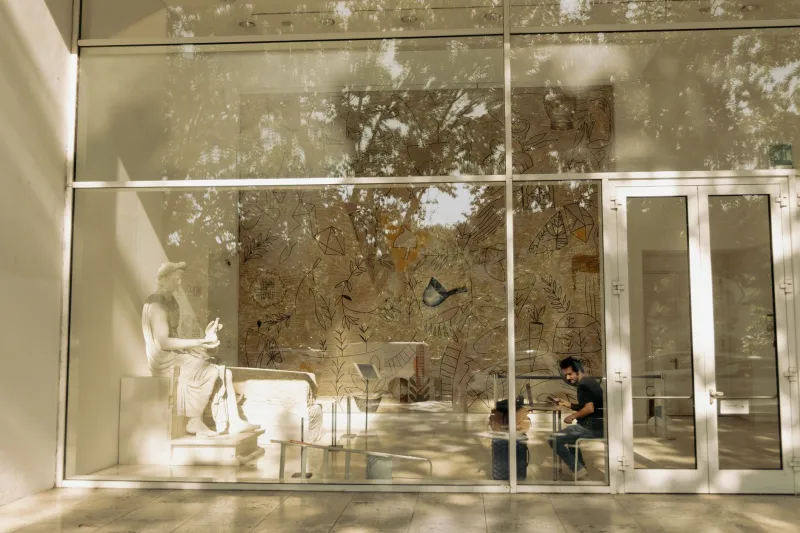
For much of the twentieth century, the American museum operated according to a familiar script: acquire, preserve, display. Works traveled to institutions through dealers, auction houses, and estate negotiations — a process that, however sophisticated, kept the creative act itself at arm's length from the institution. Today, that script is being rewritten. Across the country, museums and cultural foundations are stepping directly into the role of patron, commissioning artists from Lagos to Seoul, from São Paulo to Beirut, to conceive and construct works designed specifically for American spaces.
The implications of this shift extend well beyond aesthetics. At stake are questions of economic equity, institutional authority, and the very definition of what it means for a museum to engage with global culture rather than simply catalog it.
From Collection to Creation
The distinction between collecting and commissioning may seem technical, but it carries profound consequences. When a museum acquires an existing work, it inherits a finished argument — the artist's vision has already been fully expressed, and the institution's role is curatorial. A commission, by contrast, initiates a conversation. The artist must respond to a specific site, a specific audience, and a specific cultural moment, often in dialogue with the institution's own history and architectural character.
This dynamic has proven especially generative when the commissioned artist arrives from outside the American context entirely. International artists bring not only distinct visual languages but also different relationships to institutional space itself. Many come from countries where the museum as a civic form carries different — sometimes fraught — associations, and that perspective can produce work that asks American audiences to reconsider spaces they have long taken for granted.
The Guggenheim's long-standing commission programs, the Walker Art Center's investment in large-scale temporary installations, and the more recent initiatives at institutions like the Institute of Contemporary Art in Los Angeles and the Museum of Fine Arts in Houston have all demonstrated that site-specific international commissions generate exceptional audience engagement. Visitor dwell time increases. Conversations happen in galleries that previously functioned as corridors. Educators report that commissioned works, because they are embedded in the specific environment where people encounter them, offer richer entry points for programming than traveling exhibitions.
Dismantling the Gatekeeping Architecture
Critics of the traditional acquisition model have long argued that it concentrates access to institutional visibility in the hands of a relatively small network of galleries, advisors, and auction specialists — a network that has historically skewed toward Western Europe and the United States. The commission model does not automatically dissolve those power structures, but it does create an alternative pathway.
When a museum commissions directly, it can engage artists who may lack representation in the primary market, who work in forms — land art, performance-integrated installation, community-embedded practice — that resist conventional commodification, or who are based in regions where the gallery infrastructure connecting local talent to global institutions remains underdeveloped. The commission becomes, in effect, a form of institutional advocacy, signaling to the broader art world that a particular artistic voice deserves sustained attention.
This is not without its complications. Critics have raised legitimate concerns about the power asymmetries embedded in even the most well-intentioned cross-border commissions. Who sets the terms? Who retains intellectual and physical ownership of the resulting work? How are artists supported through the logistical and cultural challenges of working in an unfamiliar country? The most thoughtful institutions are increasingly addressing these questions through multi-year relationships rather than single engagements, embedding residency periods, community liaison programs, and post-installation documentation support into the commission structure itself.
The Economics of Transnational Creation
The financial architecture of an international site-specific commission is considerably more complex than a standard acquisition. Beyond the artist's fee, institutions must account for extended residency costs, material sourcing, fabrication support, translation and interpretation services, shipping and customs logistics, and — critically — the time required for an artist to genuinely absorb and respond to a site they have never previously inhabited.
For many international artists, particularly those from economies where arts funding infrastructure is limited, a well-structured American museum commission represents a transformative economic opportunity. It provides not only immediate income but also the kind of institutional credential that reshapes a career's international trajectory. Several artists who received their first major American commissions in the early 2010s have since become central figures in the global contemporary art conversation — a pattern that speaks to the genuine career-shaping power these opportunities carry.
For institutions, the investment calculus has shifted as private and public funders have grown more interested in supporting programs that demonstrate genuine international engagement rather than token diversity. Philanthropic foundations with global mandates, corporate sponsors with international operations, and municipal arts agencies seeking to position their cities as cosmopolitan cultural destinations have all shown willingness to underwrite cross-border commissions at levels that would have been unusual a decade ago.
Case Studies in Transformation
Consider the ripple effects generated when a major Midwestern natural history museum commissioned a multi-room installation from a West African sculptor whose practice draws on both traditional craft lineages and contemporary conceptual frameworks. The resulting work did not merely occupy gallery space — it proposed a counter-narrative to the museum's existing ethnographic collections, inviting visitors to encounter African material culture as living creative tradition rather than historical artifact. The commission generated more media attention for the institution than any acquisition in the preceding five years and catalyzed a broader programmatic review of how the collections themselves were framed.
Or consider a temporary public installation commissioned from a Japanese artist collective for a major East Coast museum's outdoor plaza. Designed in direct response to the plaza's relationship with the surrounding neighborhood — a community with its own complex history of displacement and renewal — the work drew audiences who had never previously entered the museum's doors. The commission functioned not only as art but as urban diplomacy, a demonstration that the institution understood its responsibilities to extend beyond its own walls.
These examples are not anomalies. They represent an emerging institutional logic, one that understands the site-specific international commission as a form of long-term investment in both cultural relevance and civic relationship.
A New Model for Global Engagement
What distinguishes the most successful cross-border commissions is not the prestige of the artist's home country or the scale of the resulting installation, but the quality of the institutional relationship that makes the work possible. Museums that approach international artists as genuine collaborators — investing in the time, translation, and trust that meaningful creative dialogue requires — consistently produce work that resonates more deeply with American audiences than institutions that treat the commission as a procurement transaction.
In this sense, the cross-border commission is less a departure from the museum's traditional mission than a return to it. At its most fundamental, the museum exists to facilitate encounters between human beings and creative expression that would not otherwise occur. When an institution invests in bringing a singular international vision to bear on a specific American space, it honors that mission in its most ambitious form — creating not just an exhibition, but an experience that could exist nowhere else in the world.