Beyond the Gallery Wall: How Global Art Ventures Are Quietly Rebuilding Local Economies Across America
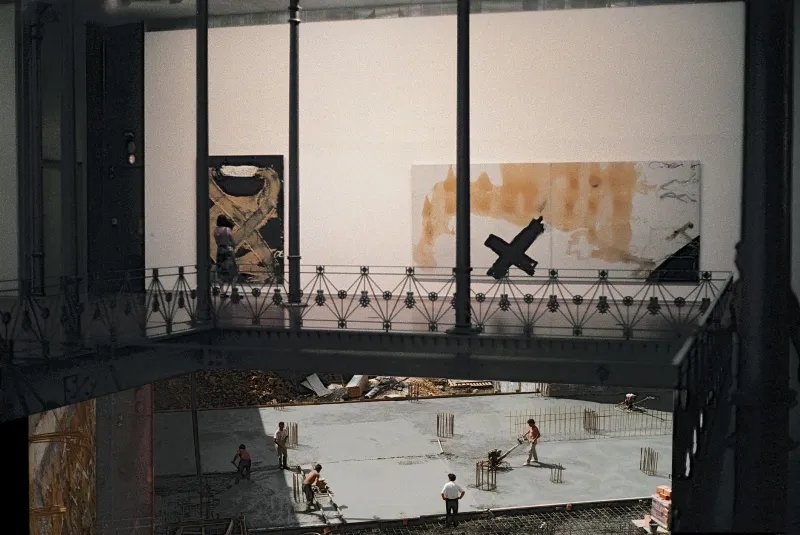
When a team of European and Southeast Asian artists descended on Paducah, Kentucky, several years ago to realize a large-scale public installation along the Ohio River waterfront, most regional news coverage focused on the visual spectacle. Reporters wrote about color, scale, and conceptual ambition. What received considerably less attention was the quiet economic machinery that hummed into motion around the project—the welding subcontractors hired from a neighboring county, the small hotel that sold out for three consecutive weeks, the local fabrication shop that had to bring on two additional workers to meet the project's steel component requirements.
That gap between cultural narrative and economic reality sits at the heart of a growing conversation among urban planners, arts administrators, and regional development officials: international art projects are generating jobs in overlooked American communities, and almost nobody is keeping score.
The Multiplier Effect Nobody Talks About
Economists have long understood that investment in one sector creates ripple effects throughout a regional economy. A dollar spent on a construction project does not simply disappear after the contractor is paid—it cycles through hardware suppliers, fuel stations, restaurants, and payroll accounts before dissipating. The same principle applies, with remarkable consistency, to internationally funded art installations.
Dr. Renata Holloway, an economic development consultant who has worked with arts agencies in the rural Midwest, estimates that for every dollar a foreign-funded art project spends within a host community, between $1.40 and $2.10 in secondary economic activity is generated locally. "The challenge," she notes, "is that these projects are rarely classified as economic development investments. They go through arts councils, not chambers of commerce, so the data never gets properly aggregated."
That classification problem has real consequences. Communities competing for traditional economic development dollars—manufacturing plants, distribution centers, corporate relocations—present detailed employment projections and tax revenue forecasts. Communities hosting international art projects rarely assemble equivalent documentation, which means the full value of creative investment remains invisible to the policymakers who control incentive budgets.
Case Study: The Fabrication Economy in Smaller Markets
Consider what happened in Gadsden, Alabama, when a multi-national creative collective selected the city as the site for a monumental outdoor installation exploring industrial heritage. The project required custom metalwork, concrete casting, specialty lighting systems, and months of on-site assembly. Every one of those needs was sourced locally wherever possible—not out of idealism, but out of practical necessity. Shipping heavy fabricated components across the country is expensive; working with regional suppliers is not.
The result was that three local metal fabrication businesses received contracts they described as among the largest in their recent history. One shop owner, speaking to a regional business publication at the time, noted that the project allowed him to retain two employees he had been considering letting go during a slow quarter. A concrete supplier reported similar circumstances.
Beyond fabrication, the project's international artistic team required housing for an extended period. The city's modest hotel inventory sold out, sending visitors to bed-and-breakfasts and short-term rentals across a twenty-mile radius. Local restaurants reported measurable revenue increases during the installation period. A shuttle service operator expanded his fleet by two vehicles to manage airport transfers.
None of this appeared in the cultural press coverage of the project. All of it appeared in the quarterly reports of businesses that had no particular connection to the art world.
Hospitality as Hidden Beneficiary
The hospitality dimension of international art projects deserves particular scrutiny, because it represents one of the most consistent—and most consistently undercounted—economic benefits in smaller American markets.
Large-scale international installations typically involve extended site visits during the planning and fabrication phases, followed by intensive installation periods that can last anywhere from two weeks to several months. International artists and their technical teams require accommodation, transportation, meals, and support services throughout. In major metropolitan areas, this demand is absorbed invisibly into existing hospitality infrastructure. In smaller communities, it is genuinely transformative.
In Marfa, Texas—a community of fewer than two thousand residents that has become one of America's most recognized destinations for international art—the economic footprint of creative tourism is now formally tracked by regional development authorities. Visitor spending attributable to art-related travel has been documented in the tens of millions of dollars annually, supporting employment in sectors that have nothing to do with making art: property management, food service, retail, and transportation.
What Marfa demonstrates at scale, dozens of smaller communities are beginning to experience in more modest but equally meaningful ways.
The Workforce Development Angle
Perhaps the least discussed dimension of international art project economics is workforce development. When a globally connected creative team arrives in a community with specific technical requirements—specialty rigging, advanced lighting programming, materials conservation—they frequently train local workers in skills that persist long after the project concludes.
This dynamic has been observed in communities across the country. A technical crew member trained on the structural requirements of a large-scale kinetic installation may subsequently market those skills to industrial clients. A local project manager who coordinates logistics for an international artistic team gains experience that translates directly into broader project management roles.
Economic development professionals who have worked alongside international art projects describe this as an underappreciated form of human capital investment. "These projects bring expertise into communities that don't have natural access to it," observes Marcus Trent, a regional development director based in the Mississippi Delta. "That expertise doesn't leave when the artists leave."
Closing the Data Gap
The primary obstacle to leveraging international art investment as a formal economic development tool is the persistent absence of standardized impact measurement. Arts organizations track attendance figures and press coverage. Economic development agencies track jobs created and tax revenue generated. Almost no institutional framework currently bridges those two data collection systems.
Several forward-thinking regional arts councils have begun experimenting with economic impact surveys modeled on those used by tourism boards, requiring grant recipients to document local procurement, employment, and hospitality expenditures. The early results are striking in their consistency: even modest international art projects, with total budgets in the low six figures, generate measurable secondary employment in the communities that host them.
For the creative agencies and international artist collectives who bring these projects to American soil, there is both an opportunity and a responsibility in this data gap. Documenting economic impact is not merely a grant reporting exercise—it is the foundation for building the kind of cross-sector partnerships that can secure long-term institutional support for ambitious creative work.
The Argument for Reclassification
The communities that have benefited most visibly from international art investment share a common characteristic: local leadership that was willing to classify creative projects as economic development rather than cultural amenity. That reclassification—semantic as it may sound—unlocks different funding streams, different partnership possibilities, and different political coalitions.
For smaller American cities and towns looking for alternatives to the zero-sum competition for traditional industrial investment, international art projects represent something genuinely rare: a form of economic development that improves quality of place at the same time it generates employment. The workers who benefit are not always the ones who appear in arts press releases. But they are real, and their livelihoods are shaped by decisions made in creative agencies and arts funding offices far removed from their daily experience.
Counting them is not just an academic exercise. It is the prerequisite for building the kind of sustained investment that transforms communities rather than merely decorating them.