Invisible Patrons: How American Collectors Are Secretly Bankrolling the World's Most Elusive Street Artists
In the conventional imagination, an art acquisition involves white walls, polished concrete floors, and a handshake between a collector and a gallerist. What it rarely involves is a pseudonym, an encrypted messaging thread, and a cryptocurrency wallet. Yet for a growing segment of the American collecting class, this is precisely how business gets done.
Across the United States, a discreet but consequential movement is taking shape—one in which private collectors, family foundations, and even select cultural institutions are directing meaningful funding toward international street artists, muralists, and guerrilla creators who have, by philosophical choice, remained outside the formal art market. Understanding how this arrangement functions—and why it is expanding—requires a closer look at both the collectors who are driving it and the creative ecosystem they are quietly sustaining.
The Allure of the Unsigned
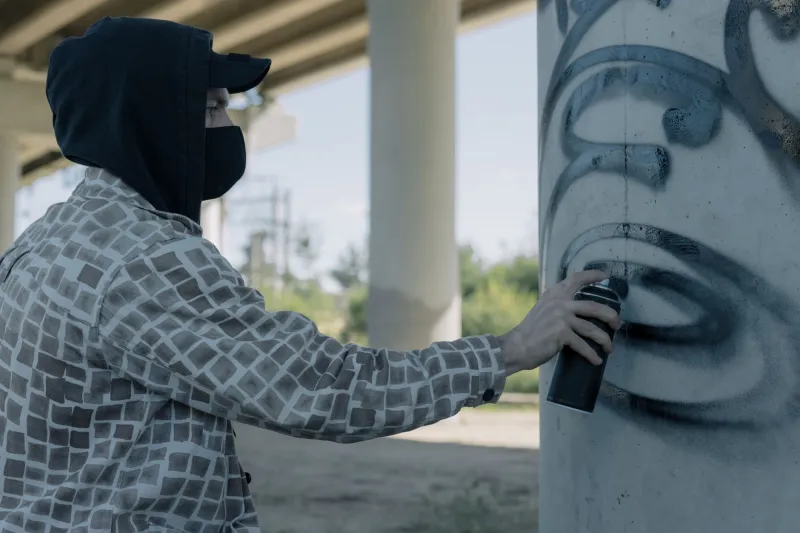
For decades, the street art world has operated on a particular kind of cultural currency: anonymity. Artists working under monikers rather than legal names, executing work in jurisdictions where its creation may be technically unlawful, have long cultivated an authenticity that institutional art struggles to replicate. That authenticity, paradoxically, is precisely what has made their work so attractive to sophisticated collectors.
The tension is obvious. A collector who commissions or acquires work from an anonymous artist risks compromising the very quality that makes the piece valuable. If the act of acquisition forces an artist into the open—into contracts, invoices, and press releases—the mystique evaporates, and with it, a significant portion of the work's cultural resonance.
This is the central problem that a new generation of digital infrastructure has begun to solve.
Blockchain as a Bridge
The application of blockchain technology to art provenance is not new. What is newer, and considerably more nuanced, is its deployment as a mechanism for preserving anonymity while simultaneously establishing verifiable authenticity and ownership.
Several platforms operating at the intersection of Web3 technology and contemporary art now allow artists to mint certificates of authenticity linked to specific works—whether a photograph of a completed mural, a limited physical edition, or a digital documentation file—without ever disclosing a legal identity. The artist's pseudonymous wallet address becomes, in effect, their signature. The transaction is immutable and publicly verifiable on the blockchain, yet the human being behind it remains as invisible as ever.
For American collectors, this arrangement offers something the traditional market rarely provides: documented provenance without the social machinery of the gallery system. A family foundation in Chicago or a private collector in Los Angeles can acquire a documented work by a celebrated but legally anonymous artist in São Paulo, Lagos, or Tbilisi, and hold that acquisition with full confidence in its legitimacy—without ever knowing the artist's birth name.
The Geography of the Underground
What makes this trend particularly significant from the perspective of global creative exchange is the international dimension. The street artists attracting American collector interest are not primarily domestic. They are working in cities across South America, sub-Saharan Africa, Southeast Asia, and Eastern Europe—regions where the street art tradition carries distinct political and social weight, and where the decision to remain anonymous is often not merely aesthetic but a matter of personal safety.
Collectors who have spoken to arts journalists on background describe a process that bears little resemblance to a gallery visit. Initial contact is typically established through intermediaries—curators with deep roots in specific urban scenes, or through closed digital communities where trust is established over time. Negotiations are conducted through encrypted channels. Payment is structured in cryptocurrency, occasionally supplemented by in-kind support such as materials, travel funding, or legal resources that can be transmitted without creating a paper trail linking artist to patron.
The works themselves range from documentation of site-specific installations to physical editions produced in limited runs—screen prints, cast objects, annotated photographs—that can be shipped discreetly and stored in private collections without public disclosure.
Institutional Caution and Creative Conviction
Not every institution is willing to engage with the legal and ethical complexities this model introduces. Several prominent American museums have declined to comment publicly on whether they have pursued similar arrangements, citing concerns about due diligence, anti-money-laundering compliance, and the reputational risks of appearing to endorse work produced in violation of local property laws.
Those concerns are legitimate. The art market's existing regulatory framework was not designed with pseudonymous blockchain transactions in mind, and legal counsel in this space is still largely improvised. The Financial Crimes Enforcement Network's 2020 guidance on art market participants has added a layer of scrutiny that some institutions find difficult to reconcile with the opacity these acquisitions require.
Yet the collectors who are most active in this space tend to be those with the highest tolerance for ambiguity—and the most clearly articulated conviction that the work itself justifies the complexity. Many describe their patronage in terms that echo philanthropic giving more than speculative acquisition: they are funding artists whose voices, they believe, would otherwise go unsupported, and whose work speaks to political and social realities that the formal art world is structurally disinclined to amplify.
Preservation Without Exposure
One underappreciated dimension of this phenomenon is its archival function. Street art is, by nature, ephemeral. Works are painted over, weathered, demolished along with the structures that host them, or removed by municipal authorities. The documentation acquired by private collectors often represents the only high-resolution, contextually annotated record of a given piece's existence.
In this sense, American collectors are performing a preservation role that no museum or public institution is currently equipped to fulfill at scale. The archive being built—however informally and invisibly—constitutes a significant record of early twenty-first century creative production in cities that art history has traditionally underrepresented.
Whether that archive will ever become publicly accessible is another question entirely. Some collectors express a long-term intention to donate holdings to institutions once the legal and ethical frameworks have matured. Others are more circumspect, acknowledging that disclosure may never be appropriate given the commitments made to the artists involved.
A New Topology of Support
What emerges from a careful examination of this trend is a picture of the art world's support structures quietly reconfiguring themselves around new possibilities. The gallery, for all its enduring importance, is no longer the only viable conduit between artist and collector. Digital infrastructure, cryptocurrency, and a shared commitment to creative authenticity have opened a parallel channel—one that is, by design, difficult to observe from the outside.
For Mondo Art Projects, whose interest lies precisely in the spaces where global creativity finds unconventional form, this development warrants sustained attention. The artists being supported through these arrangements are producing some of the most politically urgent and formally inventive work of the current moment. The collectors enabling that work are, in their own way, shaping the conditions under which global art history is being made.
That they are doing so invisibly may, in the end, be the most fitting tribute to the artists they admire.