The People's Commission: How Neighborhood Crowdfunding Is Putting Global Art in American Hands
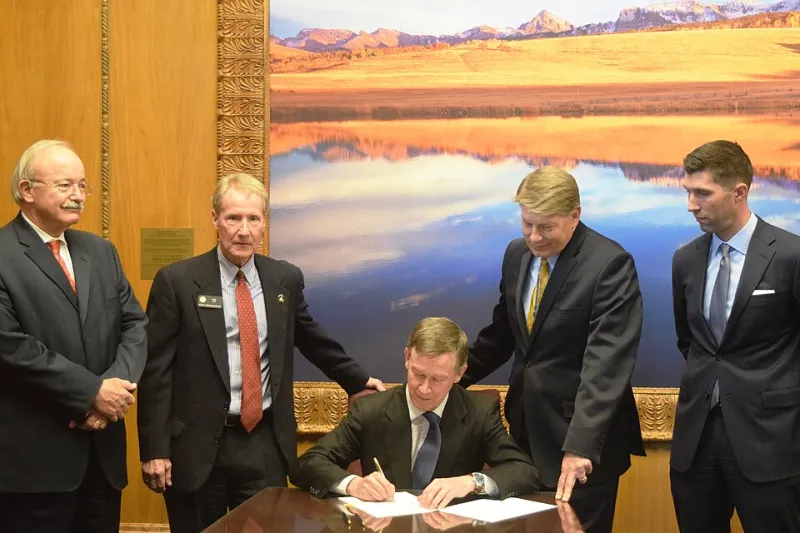
Photo: Colorado Senate GOP, Public domain, via Wikimedia Commons
The traditional commissioning of public art has always been, at its core, a story about access. Access to funds. Access to networks. Access to the institutional relationships that determine which artists receive major opportunities and which do not. For most of American history, that access has been concentrated in a relatively small number of hands: municipal arts agencies, private foundations, corporate sponsors, and the gallery ecosystem that surrounds them.
A growing movement is challenging that arrangement from the ground up — and it is doing so one crowdfunding campaign at a time.
From Kickstarter to Cultural Agency
The mechanics of community-led art commissioning are, in one sense, familiar. Platforms such as Kickstarter, GoFundMe, and the arts-specific ioby have enabled grassroots fundraising for creative projects for well over a decade. What is new — and what distinguishes the current moment — is the ambition of what communities are choosing to fund, and the increasingly international scope of the artists they are inviting to realize those visions.
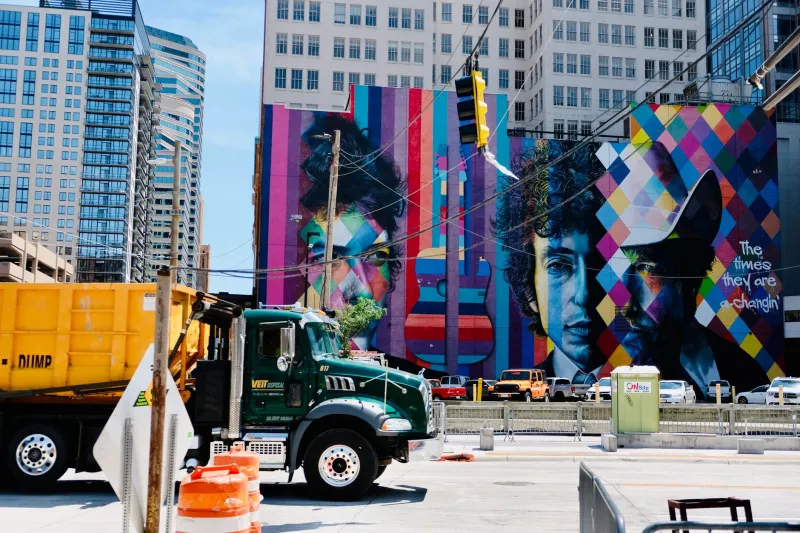
In Hamtramck, Michigan, a neighborhood known for its extraordinary demographic diversity and its long history of immigrant communities, residents raised over $180,000 through a combination of small individual donations and matched community foundation grants to commission a large-scale mural from a Bangladeshi-American artist whose work had previously been seen primarily in Dhaka and London. The campaign, organized through a neighborhood cultural council, bypassed the city's arts commission entirely — not out of antagonism, but out of impatience with a process that had historically taken years to move from concept to completion.
The result was not merely a mural. It was a statement about who in Hamtramck has the authority to shape the visual identity of their own streets.
Rewriting the Gatekeeping Script
The traditional public art commissioning process is, by design, slow and deliberate. It involves calls for proposals, review committees, community consultations, legal agreements, and, in the case of federally funded projects, compliance with a labyrinthine set of regulations. These safeguards exist for legitimate reasons, and they have produced some of the most celebrated public art in the country.
But they have also produced blind spots. The artists who navigate institutional commissioning processes successfully tend to be those with established relationships with American arts infrastructure — those who have representation, exhibition histories legible to American curators, and the administrative capacity to manage complex contractual arrangements. For many internationally based artists, particularly those from regions underrepresented in the global art market, these requirements function as invisible barriers.
Crowdfunded commissioning, by contrast, operates on different terms. The selection criteria are set by the community itself, and the evaluation framework is less likely to privilege institutional pedigree over cultural resonance. A neighborhood in South Los Angeles commissioning a Ghanaian sculptor, or a community organization in Pittsburgh funding a mural by an artist from Guadalajara, is making a fundamentally different kind of cultural statement than a city arts agency would — and reaching different conclusions about what constitutes artistic merit.
Case Studies in Community Power
The Hamtramck example is far from isolated. In the Fruitvale district of Oakland, California, a coalition of local businesses and residents successfully crowdfunded a permanent installation by a Mexican ceramicist whose previous works had appeared in public spaces in Guadalajara, Mexico City, and Barcelona. The campaign raised $95,000 over six weeks, with an average donation of just under forty dollars — a figure that speaks to the breadth of community investment as much as its depth.
In Durham, North Carolina, the nonprofit arts organization Elsewhere coordinated a crowdfunding effort that brought a Senegalese textile artist to the city for a six-month residency culminating in a permanent installation in a historically Black neighborhood. The campaign was deliberately structured to prioritize micro-donations from residents of the neighborhood itself, ensuring that the commissioning power remained with those most directly affected by the work.
What these campaigns share is not merely a funding mechanism but a philosophy: that the communities living with public art day after day should have a meaningful voice — and ideally, a meaningful stake — in determining what that art says and who makes it.
The Limits of Democratization
The crowdfunding model is not without its tensions and contradictions. Critics within the arts community have raised concerns about the sustainability of campaigns as a primary funding mechanism, noting that the communities most in need of cultural investment — those with the least disposable income — are also those least positioned to generate significant crowdfunding revenue without substantial external matching.
There are also questions about the nature of the "community voice" that crowdfunding campaigns purport to represent. Digital fundraising platforms skew toward participants with reliable internet access, social media fluency, and existing networks of potential donors — demographics that do not always align neatly with the full range of residents in any given neighborhood.
"Crowdfunding can be a powerful tool for communities that already have some organizational infrastructure," acknowledges Keisha Morales, a public art consultant who has worked with several community-led campaigns in the Midwest. "But it's not a silver bullet. You still need someone to do the work of building trust, identifying artists, managing contracts. The platform doesn't do that for you."
A Shift in Cultural Gravity
Despite these caveats, the trajectory is clear. American communities — particularly those in cities long overlooked by the traditional art world — are increasingly asserting their right to shape their own cultural landscapes, and they are looking beyond national borders to do so. The artists they are choosing reflect not just aesthetic preferences but political commitments: to representation, to cross-cultural exchange, and to the idea that global creativity belongs in every neighborhood, not just those adjacent to major museums.
For international artists, the implications are equally significant. A commission sourced directly from a community carries a different kind of meaning than one brokered through institutional channels. It represents an invitation from people rather than organizations — a distinction that many artists describe as both humbling and energizing.
The people's commission, it turns out, may be the most powerful commission of all.