Oceans Apart, In Perfect Sync: The New Wave of Remote Music Collaborations Reshaping American Sound
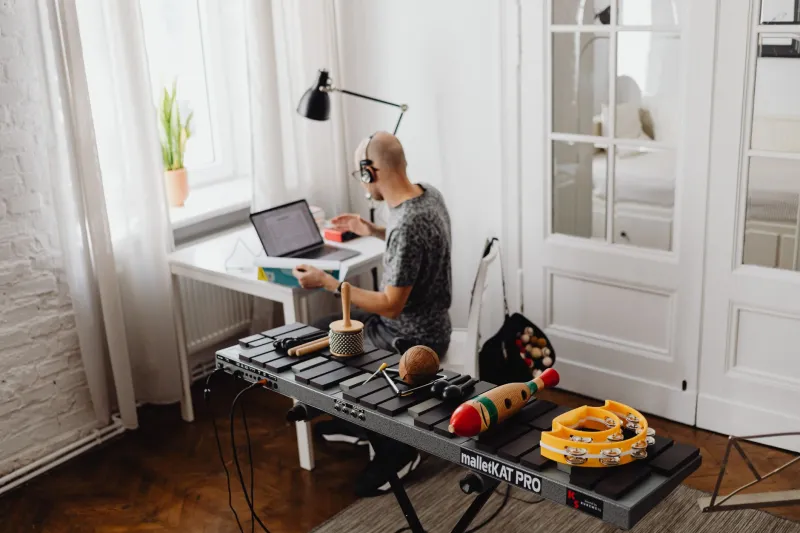
For most of the twentieth century, the recording studio was a sacred, physical space — a room where chemistry was built in real time, where producers and artists breathed the same air and argued over the same mixing board. That model, long treated as gospel by the American music industry, is quietly being dismantled. In its place, a new architecture of collaboration has emerged: one built on cloud-based file transfers, asynchronous voice notes, and the particular intimacy of a 2 a.m. video call between Lagos and Los Angeles.
The artists driving this shift are not fringe experimenters. They are working musicians — producers, songwriters, and performers — who have discovered that geographic separation, rather than limiting creative output, often amplifies it.
The Studio Without Walls
The logistics of remote music production have evolved dramatically over the past decade. Platforms such as Splice, Sessionwire, and Soundtrap have made it technically feasible to co-produce tracks across continents with near-studio-quality fidelity. But the more significant transformation is cultural. Artists are no longer treating remote collaboration as a compromise. They are treating it as a distinct creative methodology with its own advantages.
Chicago-based R&B producer Marcus Tillman, who has spent the past three years co-writing with a producer collective in Accra, Ghana, describes the dynamic as generative rather than limiting. "When you work with someone in the same city, there's a social gravity to the session," he explains. "You defer to whoever has the loudest voice in the room. When you're sending stems back and forth with someone you've never met, you have to let the music do the talking. There's no small talk to hide behind."
That enforced focus on the work itself appears to be a recurring theme among artists who have embraced the remote model. Without the option of breaking creative tension with a coffee run or a side conversation, collaborators are compelled to communicate with unusual precision about their intentions — a discipline that often produces cleaner, more purposeful results.
Cultural Distance as Creative Fuel
Beyond the logistical mechanics, the more compelling story is what happens when American musical sensibilities collide with production aesthetics from Johannesburg, São Paulo, Seoul, or Beirut. The results are rarely predictable, and that unpredictability is precisely the point.
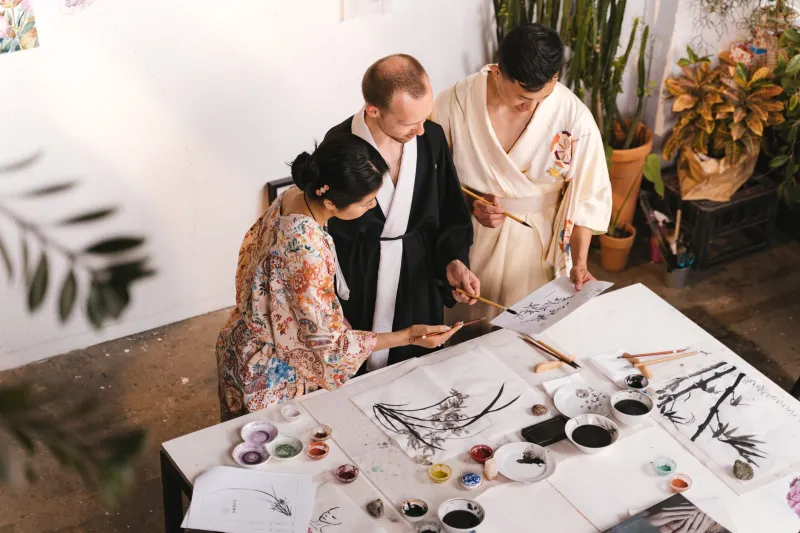
New York-based singer-songwriter Priya Desai recently completed an EP developed almost entirely through remote sessions with a producer based in Chennai and a percussionist working out of Medellín, Colombia. None of the three collaborators share a native language, and their sessions relied heavily on annotated audio recordings and shared reference playlists.
"There were moments of genuine confusion — rhythmic ideas I couldn't contextualize, harmonic choices that felt alien to me at first," Desai acknowledges. "But those were also the moments that made the record interesting. I stopped trying to translate everything into a framework I already understood, and the music opened up."
The EP, released independently earlier this year, has accumulated over two million streams and attracted licensing inquiries from two major US television networks — a commercial outcome that neither Desai nor her collaborators anticipated when the project began as an informal creative experiment.
Navigating the Friction
Not every remote collaboration unfolds smoothly. The challenges are real, and artists who have navigated them successfully are candid about the effort required. Time zone arithmetic alone can be exhausting: coordinating a real-time session between Portland, Oregon, and Mumbai requires at least one party to work at an unconventional hour, and sustained creative relationships demand a willingness to absorb that inconvenience equitably.
Cultural misalignments in workflow expectations can be equally disruptive. American producers accustomed to rapid iterative feedback cycles sometimes encounter collaborators from traditions that favor longer periods of individual development before sharing work. Neither approach is superior, but the friction between them can derail projects that lack a clearly negotiated working agreement.
Los Angeles-based producer and musician Devon Achebe, who has collaborated with artists in Nigeria, South Korea, and the Netherlands, recommends establishing creative contracts that address not just rights and royalties but process expectations. "You need to agree on revision culture before you start," he says. "How many rounds of feedback are we doing? Who has final say on what? These conversations feel awkward early on, but they prevent enormous problems later."
What American Audiences Are Hearing
The sonic output of these collaborations is beginning to register in measurable ways across the US market. Streaming data consistently shows that American listeners, particularly those between the ages of eighteen and thirty-four, are engaging with genre-hybrid releases that bear the fingerprints of cross-cultural production. The commercial success of Afrobeats-influenced pop, Latin trap, and K-influenced indie rock in the US over the past several years has created an audience primed for sonic experimentation.
Record labels have taken notice, though many remain uncertain how to categorize — and therefore market — music that resists easy genre assignment. Independent artists, freed from the pressure to fit neatly into a promotional framework, have found this ambiguity to be a competitive advantage. Without a label's genre-specific playlist strategy to satisfy, they can allow the music to find its own audience organically.
The Future of the Session
The pandemic accelerated remote music collaboration by necessity, but the artists who have continued and deepened these practices post-2020 are doing so by choice. The evidence suggests they are onto something durable.
What is emerging is not simply a new production technique but a fundamentally different model of musical authorship — one in which creative identity is formed through encounter with difference rather than through the refinement of a singular, unified vision. For American musicians willing to relinquish the comfort of the familiar studio dynamic, the world has become both a collaborator and a co-producer.
The music that results is, by its nature, harder to place and harder to predict. It is also, increasingly, harder to ignore.